

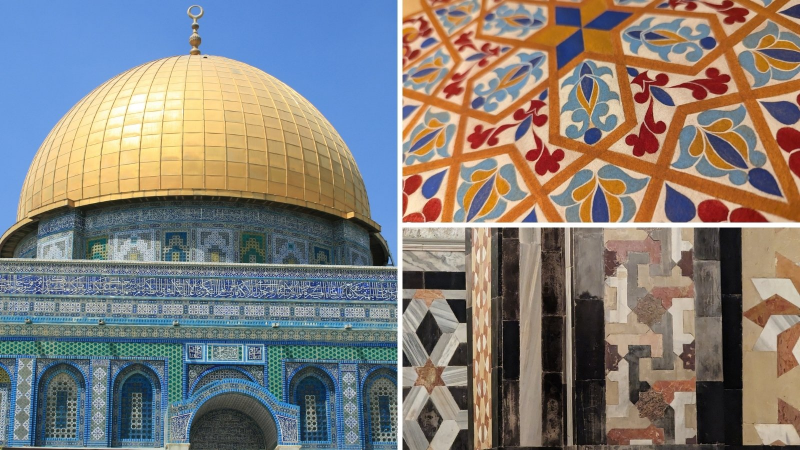
Patterns from the Al-Aqsa Mosque Complex
About
Explore the geometric patterns from the Al-Aqsa complex in Jerusalem, a site whose architectural richness reflects centuries of Islamic craftsmanship. The construction of its various buildings spans multiple caliphates—Umayyad, Mamluk, and Ottoman—resulting in a unique layering of artistic traditions. Across these eras, craftspeople and artisans applied geometric principles using a wide array of materials, including woodwork, marble, glass, and stucco carving, creating a visually unified yet historically diverse sacred space.
This course demonstrates how geometric principles were applied to shape a beautiful and cohesive place of worship over different periods and architectural contexts. Through this lens, students will explore how patterns from the same geometric “family” can manifest as stars, rosettes, or other motifs, and examine how patterns from distinct Islamic periods often share underlying construction techniques.
In this iteration of the course, we will study how the architectural elements of different parts of the Al-Aqsa complex relate to one another, highlighting their geometric connections. We will delve into patterns from Masjid Al-Qibli and compare them with related designs from Masjid Ibrahim in Hebron, which originates from a similar period. The course also includes an exploration of the Dome of the Rock and geometric patterns found in windows currently housed in the Al-Aqsa Museum, offering a broad and interconnected view of this holy site.
Booking Options
About
Explore the geometric patterns from the Al-Aqsa complex in Jerusalem, a site whose architectural richness reflects centuries of Islamic craftsmanship. The construction of its various buildings spans multiple caliphates—Umayyad, Mamluk, and Ottoman—resulting in a unique layering of artistic traditions. Across these eras, craftspeople and artisans applied geometric principles using a wide array of materials, including woodwork, marble, glass, and stucco carving, creating a visually unified yet historically diverse sacred space.
This course demonstrates how geometric principles were applied to shape a beautiful and cohesive place of worship over different periods and architectural contexts. Through this lens, students will explore how patterns from the same geometric “family” can manifest as stars, rosettes, or other motifs, and examine how patterns from distinct Islamic periods often share underlying construction techniques.
In this iteration of the course, we will study how the architectural elements of different parts of the Al-Aqsa complex relate to one another, highlighting their geometric connections. We will delve into patterns from Masjid Al-Qibli and compare them with related designs from Masjid Ibrahim in Hebron, which originates from a similar period. The course also includes an exploration of the Dome of the Rock and geometric patterns found in windows currently housed in the Al-Aqsa Museum, offering a broad and interconnected view of this holy site.
Our payments are processed using : Sage Pay