

Lecture: Andrei Rublev & Hesychast Mysteries of Byzantium
Who was Andrei Rublev?
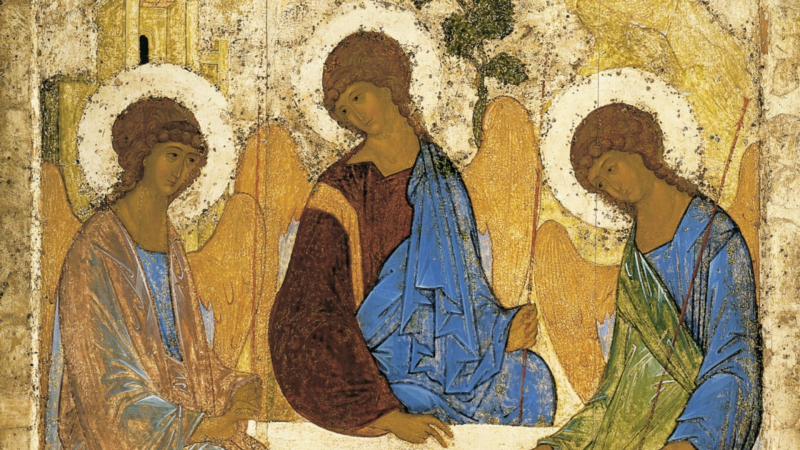
Recent scholarly studies in Russia are now confident that only one icon – the famous though much repainted Trinity – is actually by Rublev.
Rublev was certainly not the celebrity painter and cultural hero invented by 20th century Russian historians. He was far more interesting by his very invisibility. He represents the true mystical spirituality of Russian religion in the 15th and 16th centuries as expressed in icons and the esoteric tradition passed on from Mount Athos and Constantinople in the 14th century and, before that, the Egyptian desert fathers of the 4th century.
The lecture surveys the tradition of mystical prayer or Hesychasm through writers and images in an unbroken chain of schools of such knowledge over a thousand years. Rublev’s true status is that of a practitioner, through silence and contemplation, of higher consciousness and mystical vision.
Image: The Hospitality of Abraham, also known as the Old Treatment Trinity by Andrei Rublev. Moscow, 1408.
Booking Options
Who was Andrei Rublev?
Recent scholarly studies in Russia are now confident that only one icon – the famous though much repainted Trinity – is actually by Rublev.
Rublev was certainly not the celebrity painter and cultural hero invented by 20th century Russian historians. He was far more interesting by his very invisibility. He represents the true mystical spirituality of Russian religion in the 15th and 16th centuries as expressed in icons and the esoteric tradition passed on from Mount Athos and Constantinople in the 14th century and, before that, the Egyptian desert fathers of the 4th century.
The lecture surveys the tradition of mystical prayer or Hesychasm through writers and images in an unbroken chain of schools of such knowledge over a thousand years. Rublev’s true status is that of a practitioner, through silence and contemplation, of higher consciousness and mystical vision.
Image: The Hospitality of Abraham, also known as the Old Treatment Trinity by Andrei Rublev. Moscow, 1408.
Our payments are processed using : Sage Pay